
Article
The Role of Healthcare Real Estate in Practice Growth
Learn how to leverage your healthcare real estate to drive practice growth, with key insights on everything from location to expansion opportunities.

Explore the 2026 outlook for healthcare REITs and where opportunity is emerging for investors.

As 2025 draws to a close, healthcare real estate continues to stand out as one of the most resilient areas in the property market. Long-term demographic trends, stable tenant demand, and the essential nature of healthcare services have kept the sector on solid footing despite higher interest rates and slower deal activity.
For investors who want exposure to this stability and growth without the operational challenges of owning and managing properties directly, healthcare real estate investment trusts (REITs) remain an attractive option. These investment trusts, like Terramed’s REIT, are designed to give investors access to real estate assets like surgical centers, veterinary facilities, and other consumer-driven healthcare properties, without the complexities of direct ownership.
After several years of volatility, 2025 brought a sense of balance back to healthcare real estate. The year started with elevated borrowing costs, but by mid-year, more predictable interest rates encouraged REITs and institutional investors to re-enter the market.
This steady recovery was reflected in Terramed’s momentum throughout 2025, as the company expanded its national footprint through the acquisition of several state-of-the-art veterinary and medical facilities. Today, Terramed’s portfolio encompasses more than 1.5 million square feet of healthcare real estate across 35 states, underscoring the continued investor confidence in specialized, mission-critical healthcare properties.
The U.S. healthcare real estate market was valued at about $1.3 trillion in 2024 and is projected to reach $1.9 trillion by 2030, growing roughly 6 percent annually.1
For investors, the message from 2025 is clear: the sector is resilient, tenant performance is solid, and capital is returning slowly but steadily.
Out-patient volumes are expected to rise by roughly 10.6 % over the next five years.2 The migration from hospital campuses to outpatient settings continues to reshape the landscape. Health systems are consolidating inpatient services while expanding ambulatory networks in growing suburban markets.
Healthcare REITs are following that trend closely. Expect to see continued acquisitions of medical office buildings, outpatient surgery centers, and specialized clinics.
Look for REITs that focus on outpatient assets tied to strong hospital or physician networks. These tend to deliver stable occupancy and predictable rent growth.
While traditional medical office buildings remain the backbone of healthcare real estate, 2025 made it clear that investors are seeking new ways to diversify within the sector.
Within the broader outpatient and specialty sector, certain facility types are drawing increasing institutional interest due to their resilient demand and long-term leases. Facilities such as veterinary clinics, fertility centers, ophthalmology practices, and dental offices are seeing growing investment attention.
Veterinary care, in particular, continues to outperform expectations as pet ownership and spending remain high post-pandemic. The U.S. veterinary hospital market is projected to have a compound annual growth rate of around 6.2 %.3
REITs that focus on specialized, purpose-built facilities are positioned to capture consistent returns through predictable occupancy, tenant stability, and higher yield potential compared with traditional medical offices.
High construction costs continue to slow new development, but REITs are finding creative ways to expand portfolios through adaptive reuse—converting underused office, retail, and hospitality buildings into healthcare spaces.
REITs with in-house development expertise and local market knowledge will have an advantage here. Repurposing well-located properties into healthcare facilities can generate value while supporting community revitalization.
Sustainability and wellness have become strategic, not symbolic. Healthcare tenants increasingly prefer buildings that promote energy efficiency, patient comfort, and staff well-being. The global wellness real estate market reached $584 billion in 2024 and is projected to grow to $1.1 trillion by 2029.4
REITs that invest in energy-efficient systems, modern HVAC upgrades, and green certifications are not just improving sustainability, they’re also protecting long-term asset value.
Different regions present different dynamics:
Geographic diversification matters. REITs with exposure across both mature and emerging markets are better positioned to balance yield and growth potential.
Geography plays a critical role in long-term performance. Markets with aging populations, strong outpatient demand, or limited healthcare capacity tend to deliver more stable occupancy and predictable rent growth. A REIT that balances exposure between high-growth Sunbelt markets and emerging secondary or redeveloped Northeast and Midwest locations can optimize yield while diversifying risk.
Strong balance sheets, transparent acquisition pipelines, and careful capital deployment are key indicators of sound management. Look for REITs that pursue selective acquisitions, redevelopment projects, and disciplined financing strategies. These actions protect dividends and support long-term portfolio stability.
The health of a REIT’s operators directly affects portfolio performance. Outpatient facilities, physician networks, and specialty operators with strong track records and long-term leases provide stability, reduce vacancy risk, and support predictable cash flows.
Sustainability initiatives, energy-efficient systems, and wellness-oriented design are increasingly important in healthcare real estate. REITs that integrate these elements protect long-term asset value, enhance tenant satisfaction, and contribute positively to patient and community outcomes.
Healthcare real estate remains one of the most stable and strategically important corners of the market, supported by demographic trends and essential demand—and the 2026 outlook is promising. But the next phase of growth will belong to investors who are thoughtful about where and how they participate.
Healthcare REITs provide a clear, efficient path to this opportunity, offering scale, diversification, and professional management in a sector with durable demand.
Sources
Learn how to leverage your healthcare real estate to drive practice growth, with key insights on everything from location to expansion opportunities.
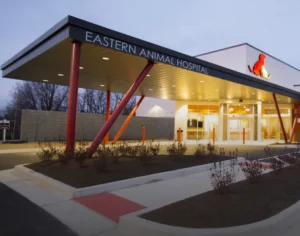
Terramed continues to expand our veterinary real estate portfolio. Read more about our latest acquisitions.

Read about our brand expansion and hear what this update means for the opportunities we can offer you.

Gain expert real estate insights into the evolving veterinary industry with Aisha Sladek of Terravet.

Discover five key trends shaping the veterinary real estate market in 2025. Learn how to maximize property value and secure financial growth.

A Comprehensive Retirement Guide for Veterinarians – stepping into retirement with a plan that meets financial and personal goals.